



Fair Recovery – Strengthening civil society and media for economic justice
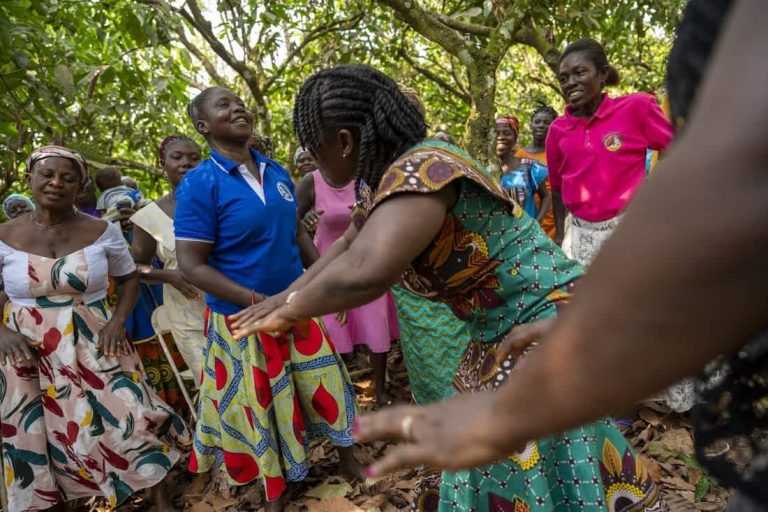
Photo: Nana Kofi Acquah/Oxfam
The Covid-19 pandemic caused the deepest global recession in decades. While rich countries have recovered from the economic crisis the global south is struggling with an unprecedented rise in poverty caused by increased national debt and inability to handle the impact of escalating food and energy prices. In addition to this, governments are also struggling to handle the impact of damages from global warming, causing severe implications for vulnerable people, hitting women and marginalized groups the hardest.
It does not have to be this way. A fair economic recovery is possible, but it requires government accountability including action against corruption and reforms of our international tax and debt systems that are deeply unjust to the world’s poorest countries.
There are challenges with weak administration, low taxpayer compliance, corruption, and a missing reciprocal link between tax, public, and social expenditures. In addition, economic austerity is weakening already fragile democracies where there is a lack of free and independent media to hold policy makers accountable for recovery plans that are fair to its citizens.
Although men and women are typically taxed under the same rules, tax systems can cause and deepen gender inequalities. Understanding and improving the impact of taxes on gender equality is therefore also a key dimension that governments need to consider as part of tax design to support sustainable financial growth that is beneficial for all people and the planet.
The project
The project has, for instance, strengthened the capacity of 591 journalists to conduct investigative work related to tax, anti-corruption and transparency through dedicated training. In Ghana, a media guide was created to support investigative journalists in developing stories on for example fair taxation and corruption cases. 100 journalists were trained in how to use the guide, and it was shared with 263 independent journalism groups around the world. Hundreds of media activities in Uganda and Kenya have been supported by project partners, while an investigation led by a project partner into dodgy tax affairs in the UK and Seychelles led to policy reform commitments in both countries.
To build broader support for fairer taxation across the region and globally, project partners have organised several international conferences such as a Pan-African Conference on Illicit Financial Flows in South Africa, and organised side events and spoken at key international negotiation meetings including the UN Tax Convention. They pushed for taxing wealthy individuals more effectively to reduce inequality, and for budgeting to better reflect the needs of women and achieved key policy commitments from decisionmakers.
Finally, the project partners worked alongside government bodies to remove obstacles to fairer, more gender-aware policies through for example an Anti-Illicit Financial Flow Tracker. This online platform monitors tax policies across African countries, giving people the information they need to push for real change and stop money from being moved out of countries illegally.
Project period: 2023-2025
Funding: 30 million NOK from Norad.
Locations: Ghana, Uganda, Kenya.