



Support Mechanism for Indigenous People
Guatemala is one of the most unequal countries in the world in terms of health, education and income distribution. The cultural diversity of the country is high with 25 languages spoken in its territory.
Guatemala’s social and economic situation today continues to be characterized by poverty, racism, exclusion, violence and impunity. This situation is partly founded in a weak state structure which possesses few resources from a low revenue.
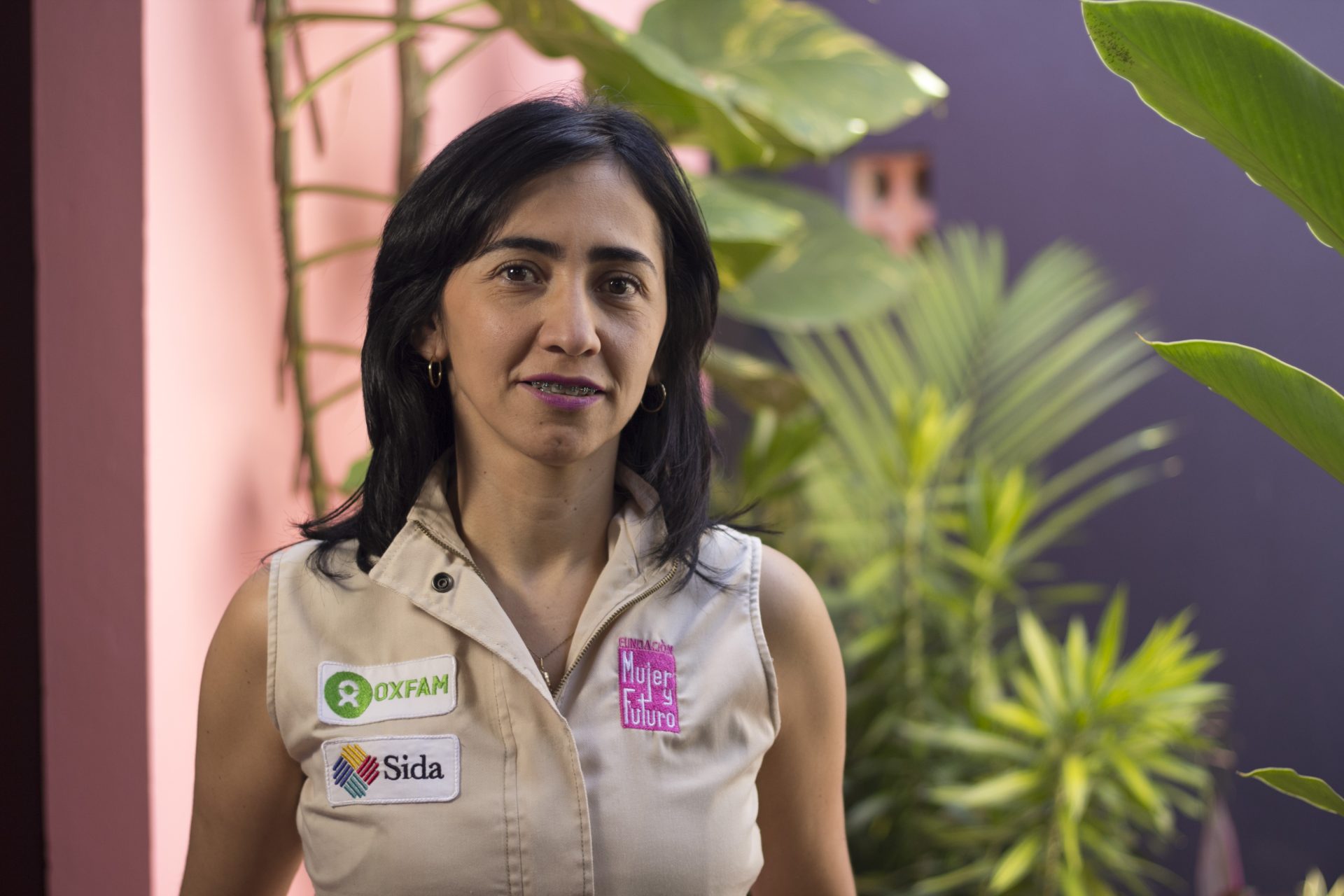
Photo: Oxfam Danmark
The project
The “Oxlajuj Tz’ikin” Indigenous Peoples’ Support Mechanism Program was implemented from the end of 2019 to 2025. The program significantly contributed to strengthening the exercise of the Individual and Collective Rights of Indigenous Peoples in Guatemala. This contributed to the self-determination of indigenous peoples and to the enhancement of awareness and implementation of legal and institutional frameworks.
Through grants provided to Indigenous Peoples’ organisations, we enabled their improved access to justice to promote and defend their individual and collective rights. Indigenous women in particular are enabled to strengthen their participation in decision-making spaces and access justice in the ordinary legal system and in indigenous peoples’ own systems, which is often a challenge due to exclusion and discrimination.
The project additionally helped develop the capacity of women and young people to know their rights and provide them with the skills to be active members of their communities, fostering a more inclusive society where women and young people have opportunities for economic development. We built on the encouraging results of the previous phase (2015-2019) where 31 projects were supported.
Many of the supported organisations focused on the participation of indigenous women in decision making practices, promoting their rights and the introduction of prevention practices for violence against women.
In addition to managing the fund, Oxfam’s role is to provide the necessary technical and political support to the local organizations, supporting their communication strategies and providing capacity development.
Results
The program reached 676 communities in 76 municipalities across all 22 departments of the country, directly impacting 148,054 people, whereof 55% were women and 20% were young people, with an additional 704,597 people reached indirectly.
Among its key results, the program contributed to change in 27 legal instruments, ranging from national laws to international human rights that advanced collective rights. Another important contribution was around strengthening territorial governance and defending land rights, where the project reached 400 communities and more than 60,000 families, while protecting and regularising more than 65,000 acres of land.
Within the topic of gender equality, the program had significant impact. The program strengthened the economic autonomy of 2,700 women, promoting leadership and participation in organisational and decision-making processes. This led to an increase in representation of women in authority structures to 22%.
During the project, 16 organisations and 23 indigenous authority structures have also increased their capacity in advocacy efforts. Likewise, 29 alliances were consolidated at different levels, which allowed greater territorial and national cohesion, as well as a more effective impact on the public agenda and the defense of democracy.
Overall, the program demonstrated high levels of sustainability, underpinned by installed capacities, regulatory frameworks, organizational legitimacy, and strategic partnerships. The Oxlajuj Tz’ikin Indigenous Peoples’ Support Mechanism Program left a solid legacy of processes, capacity and achievements that allow indigenous peoples to continue their political advocacy, the defence of their rights, and the construction of their own development models.